

Bêta-glucane d’orge NutraStat
Recherche
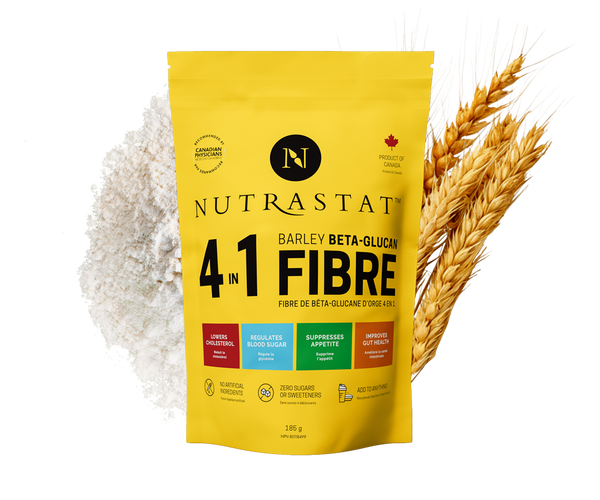
NutraStat et la santé intestinale :
Le bêta-glucane d’orge, contenu dans la fibre de bêta-glucane NutraStat, est une source de fibres alimentaires qui aide à soutenir et à maintenir un système digestif sain. Le bêta-glucane d’orge a montré des effets in vivo sur le microbiote intestinal, entraînant une hausse des acides gras à chaîne courte (AGCC) et des populations de bactéries bénéfiques comme les bactéries lactiques. Les bactéries lactiques offrent des bienfaits potentiels pour la santé, comme le contrôle des infections intestinales et une meilleure digestion du lactose. Sur le plan de la satiété, la recherche a montré que la consommation de bêta-glucane d’orge augmente la viscosité du contenu digestif. Une viscosité plus élevée retarde la vidange gastrique et ralentit le métabolisme et l’absorption des nutriments, plus précisément du glucose, en raison d’une activité enzymatique et d’une absorption par la muqueuse réduites, ce qui procure une sensation de satiété plus rapide.
- Beta Glucan: Health Benefits in Obesity and Metabolic Syndrome https://www.ncbi.nlm.nih.gov/pmc/articles/PMC3236515/
- Effect of high beta-glucan barley on serum cholesterol concentrations and visceral fat area in Japanese men--a randomized, double-blinded, placebo-controlled trial - PubMed (nih.gov) https://pubmed.ncbi.nlm.nih.gov/18074229/
- Effects of cereal beta-glucan consumption on body weight, body mass index, waist circumference and total energy intake: A meta-analysis of randomized controlled trials - PubMed (nih.gov) https://pubmed.ncbi.nlm.nih.gov/30935520/
- Soluble Dietary Fiber, One of the Most Important Nutrients for the Gut Microbiota https://www.ncbi.nlm.nih.gov/pmc/articles/PMC8624670/
- Arabinoxylan as well as β-glucan in barley promotes GLP-1 secretion by increasing short-chain fatty acids production - PubMed (nih.gov) https://pubmed.ncbi.nlm.nih.gov/36123993/
- Dietary impact on fasting and stimulated GLP-1 secretion in different metabolic conditions - a narrative review - PubMed (nih.gov) https://pubmed.ncbi.nlm.nih.gov/38218319/
- Arena M, Caggianiello G,Fiocco D, Russo P,Torelli M, Spano G, Capozz V. (2014). Barley β-Glucans-Containing Food Enhances Probiotic Performances of Beneficial Bacteria. International Journal of Molecular Sciences. 15(2): 3025–3039. https://www.ncbi.nlm.nih.gov/pubmed/24562330
- Carlson J, Erickson J, Hess J, Gould T, Slavin J. (2017). Prebiotic Dietary Fiber and Gut Health: Comparing the in Vitro Fermentations of Beta-Glucan, Inulin and Xylooligosaccharide. Nutrients, 9(12): 1361. https://www.ncbi.nlm.nih.gov/pubmed/29244718
- De Angelis M, Montemurno E, Vannini L, Cosola C, Cavallo N, Gozzi G, Maranzano V, Di Cagno R, Gobbetti M, Gesualdo L. (2015). Effect of whole-grain barley on human fecal microbiota and metabolome. Applied and Environmental Microbiology, 7945-7956. https://www.ncbi.nlm.nih.gov/pmc/articles/PMC4616929/
- Gilliland S. Health and nutritional benefits from lactic acid bacteria. (1990). FEMS Microbiology Letters, 87(1–2): 175-188. https://doi.org/10.1111/j.1574-6968.1990.tb04887.x
- Santé Canada. Monographie Bêta-glucane. (2019). https://webprod.hc-sc.gc.ca/nhpid-bdipsn/atReq?atid=beta.glucane&lang=fra
- Wang Y, Ames N, Li S, Jones P, and Khafipour E. (2014). High molecular weight barley β-glucan supports bacterial populations beneficial for gut health. The faseb Journal, 28:1 supplement. https://doi.org/10.1096/fasebj.28.1_supplement.647.45
- El Khoury D, Cuda C, Luhovyy B, Anderson G. (2011). Beta Glucan: Health Benefits in Obesity and Metabolic Syndrome. Journal of Nutrition and Metabolism, Vol 2012, 28p. https://www.hindawi.com/journals/jnme/2012/851362/
- Schroeder N, Gallaher DD, Arndt EA, Marquart L. (2009). Influence of whole grain barley, whole grain wheat, and refined rice-based foods on short-term satiety and energy intake. Appetite. 53(3):363–369. https://www.ncbi.nlm.nih.gov/pubmed/19643157
- Vitaglione P, Lumaga RB, Montagnese C, Messia MC, Marconi E, Scalfi L. (2010). Satiating effect of a barley beta-glucan-enriched snack. Journal of the American College of Nutrition, 29(2):113–121. https://www.tandfonline.com/doi/abs/10.1080/07315724.2010.10719824
- Vitaglione P, Lumaga RB, Stanzione A, Scalfi L, Fogliano V. (2009). β-Glucan-enriched bread reduces energy intake and modifies plasma ghrelin and peptide YY concentrations in the short term. Appetite, 53(3):338–344. https://www.ncbi.nlm.nih.gov/pubmed/19631705
NutraStat et le cholestérol :
Des études scientifiques ont démontré qu’un apport quotidien d’au moins 3 grammes de bêta-glucane d’orge, l’ingrédient actif de la fibre de bêta-glucane NutraStat, aide à réduire le cholestérol total et le cholestérol à lipoprotéines de basse densité (cholestérol LDL). Ces biomarqueurs sont reconnus comme des facteurs de risque dans le développement des maladies coronariennes. Des études portant sur plus de 1 000 sujets normo- et hypercholestérolémiques ont montré que le bêta-glucane d’orge a réduit les concentrations de cholestérol total et de cholestérol LDL d’environ 0,32 mmol/L et 0,27 mmol/L respectivement, sur une période de 4 à 12 semaines. Les concentrations de cholestérol HDL n’ont pas été touchées.
- AbuMweis SS, Jew S and Ames NP. (2010). Beta-glucan from barley and its lipid lowering capacity: a meta-analysis of randomized, controlled trials. European Journal of Clinical Nutrition, 64, 1472-1480. https://www.ncbi.nlm.nih.gov/pubmed/20924392
- Behall KM, Scholfield DJ, Hallfrisch J. (2004a). Diets containing barley significantly reduce lipids in mildly hypercholesterolemic men and women. The American Journal of Clinical Nutrition, 80, 1185-1193. https://www.ncbi.nlm.nih.gov/pubmed/15531664
- Behall KM, Scholfield DJ, Hallfrisch J. (2004b). Lipids significantly reduced by diets containing barley in moderately hypercholesterolemic men. The Journal of the American College of Nutrition, 23, 55-62. https://www.ncbi.nlm.nih.gov/pubmed/14963054
- Bourdon I, Yokoyama W, Davis P, Hudson C, Backus R, Richter D, Knuckles B, Schneeman B. (1999). Postprandial lipid, glucose, insulin, and cholecystokinin responses in men fed barley pasta enriched with β-glucan. American Journal of Clinical Nutrition, 69(1):55–63. https://www.ncbi.nlm.nih.gov/pubmed/9925123
- Keenan JM, Goulson M, Shamliyan T, Knutson N, Kolberg L, Curry L. (2007). The effects of concentrated barley beta-glucan on blood lipids in a population of hypercholesterolaemic men and women. British Journal of Nutrition, 97(6):1162-1168. https://www.ncbi.nlm.nih.gov/pubmed/17445284
- Li J, Kaneko T, Qin LQ, Wang J, Wang Y. (2003). Effects of barley intake on glucose tolerance, lipid metabolism, and bowel function in women. Nutrition, 19(11-12):926-929. https://www.ncbi.nlm.nih.gov/pubmed/14624940
- Newman RK, Lewis SE, Newman CW, Boik RJ, Ramage RT. (1989). Hypocholesterolemic effect of barley foods on healthy men. Nutrition reports international, 39, 749-760. https://agris.fao.org/agris-search/search.do?recordID=US8922720
- McIntosh GH, Whyte J, MvArthur R, Nestel PJ. (1991). Barley and wheat foods: Influence on plasma cholesterol concentrations in hypercholesterolemic men. The American Journal of Clinical Nutrition, 53, 1205-1209. https://www.ncbi.nlm.nih.gov/pubmed/1850576
- Narain JP, Shukla K, Bijlani RL, Kochhar KP, Karmarkar MG, Bala S, Srivastava LM, Reddy KS. (1992). Metabolic responses to a four-week barley supplement. International Journal of Food Sciences and Nutrition. 43:41-46. https://www.tandfonline.com/doi/abs/10.3109/09637489209027531?journalCode=iijf20
- Rondanelli M, Opizzi A, Monteferrario F, Klersy C, Cazzola R, Cestaro B. (2011). Beta-glucan- or rice bran-enriched foods: a comparative crossover clinical trial on lipidic pattern in mildly hypercholesterolemic men. European Journal of Clinical Nutrition. 65(7):864-71. https://www.ncbi.nlm.nih.gov/pubmed/21505506
- Sima P, Vannucci L, and Vetvicka V. (2018). β-glucans and cholesterol (Review). International Journal of Molecular Medicine, 41(4): 1799–1808. https://www.ncbi.nlm.nih.gov/pmc/articles/PMC5810204/
- Shimizu C, Kihara M, Aoe S, Araki S, Ito K, Hayashi K, Watari J, Sakata Y, Ikegami S. (2008). Effect of high β-glucan barley on serum cholesterol concentrations and visceral fat area in Japanese men – a randomized, double-blinded, placebo-controlled trial. Plant Foods for Human Nutrition, 63, 21-25. https://www.ncbi.nlm.nih.gov/pubmed/18074229
- Talati R, Baker WL, Pabilonia MS, White CM and Coleman CI. (2009). The Effects of Barley-Derived Soluble Fiber on Serum Lipids. Annals of Family Medicine, 7, 157-163. https://www.ncbi.nlm.nih.gov/pubmed/19273871
NutraStat et le diabète :
Le bêta-glucane d’orge, l’ingrédient actif de la fibre de bêta-glucane NutraStat, diminue la réponse glycémique après les repas, sans augmenter de façon disproportionnée la réponse insulinique, à des doses d’au moins 4 g par 30 g de glucides disponibles. Des études menées auprès d’hommes atteints de diabète de type 2 ont montré qu’un déjeuner à faible indice glycémique contenant une quantité modeste (3 g) de bêta-glucane pendant 4 semaines permet un bon contrôle de la glycémie. Une alimentation riche en bêta-glucane d’orge peut être bénéfique pour les personnes diabétiques et celles prédisposées aux maladies métaboliques. Parlez à votre médecin avant de modifier votre traitement.
- Alminger M, Eklund-Jonsson C. (2008). Whole-grain cereal products based on a high-fiber barley or oat genotype lower post-prandial glucose and insulin responses in healthy humans. European Journal of Nutrition, 47(6):294–300. https://www.ncbi.nlm.nih.gov/pubmed/18633670
- Battilana P, Ornstein K, Minehira K, Schwarz JM, Acheson K, Schneiter P, Burri J, Jequier E and Tappy L. (2001). Mechanisms of action of beta-glucan in postprandial glucose metabolism in healthy men. European Journal of Clinical Nutrition, 55, 327-333. https://www.ncbi.nlm.nih.gov/pubmed/11378805
- Bays H, Frestedt JL, Bell M, Williams C, Kolberg L, Schmelzer W, Anderson JW. (2011). Reduced viscosity Barley B-Glucan versus placebo: a randomized controlled trial of the effects on insulin sensitivity for individuals at risk for diabetes mellitus. Nutrition Metabolism, 16:8:58. https://www.ncbi.nlm.nih.gov/pmc/articles/PMC3170576/
- Behall KM, Scholfield DJ and Hallfrisch J. (2005). Comparison of hormone and glucose responses of overweight women to barley and oats. Journal of the American College of Nutrition, 24, 182-188. https://www.ncbi.nlm.nih.gov/pubmed/15930484
- Bourdon I, Yokoyama W, Davis P, Hudson C, Backus R, Richter D, Knuckles B, Schneeman B. (1999). Postprandial lipid, glucose, insulin, and cholecystokinin responses in men fed barley pasta enriched with β-glucan. American Journal of Clinical Nutrition, 69(1):55–63. https://www.ncbi.nlm.nih.gov/pubmed/9925123
- Cavallero A, Empilli S, Brighenti F, Stanca AM. (2002). High (1→3,1→4)-β-glucan barley fractions in bread making and their effects on human glycemic response. Journal of Cereal Science, 36(1):59–66. https://www.sciencedirect.com/science/article/pii/S0733521002904546
- Casiraghi MC, Garsetti M, Testolin G, Brighenti F. (2006). Post-prandial responses to cereal products enriched with barley beta-glucan. The Journal of the American College of Nutrition, 25(4):313-20. https://www.ncbi.nlm.nih.gov/pubmed/16943453
- Hinata M, Ono M, Midorikawa S, Nakanishi K. (2007). Metabolic improvement of male prisoners with type 2 diabetes in Fukushima Prison, Japan. Diabetes Research and Clinical Practice, 77: 327–332. https://www.ncbi.nlm.nih.gov/pubmed/17208326
- Kabir M, Oppert JM, Vidal H, Bruzzo F, Fiquet C, Wursch P, Slama G, Rizkalla SW. (2002). Four-week low-glycemic index breakfast with a modest amount of soluble fibers in type 2 diabetic men. Metabolism, 51(7):819-826. https://www.ncbi.nlm.nih.gov/pubmed/12077724
- Kim H, Stote KS, Behall KM, Spears K, Vinyard B, Conway JM. (2009). Glucose and insulin responses to whole grain breakfasts varying in soluble fiber, beta-glucan: a dose response study in obese women with increased risk for insulin resistance. European Journal of Nutrition. 48(3):170-5. https://www.ncbi.nlm.nih.gov/pubmed/19205780
- Liljeberg HG, Granfeldt YE and Bjorck IM. (1996). Products based on a high fiber barley genotype, but not on common barley or oats, lower postprandial glucose and insulin responses in healthy humans. Journal of Nutrition, 126, 458-466. https://www.ncbi.nlm.nih.gov/pubmed/8632219
- Narain JP, Shukla K, Bijlani RL, Kochhar KP, Karmarkar MG, Bala S, Srivastava LM, Reddy KS. (1992). Metabolic responses to a four-week barley supplement. International Journal of Food Sciences and Nutrition. 43:41-46. https://www.tandfonline.com/doi/abs/10.3109/09637489209027531?journalCode=iijf20
- Östman E, Rossi E, Larsson H, Brighenti F and Bjorck I. (2006). Glucose and insulin responses in healthy men to barley bread with different levels of (1→3;1 →4)-β-glucans; predictions using fluidity measurements of in vitro enzyme digests. Journal of Cereal Science, 43, 230-236. https://doi.org/10.1016/j.jcs.2005.11.001
- Pins, J and Kaur H. (2006). A review of the effects of barley beta-glucan on cardiovascular and diabetic risk. Cereal Foods World, 51, 1-11. https://www.aaccnet.org/publications/plexus/cfw/pastissues/2006/Documents/CFW-51-0008.pdf
- Tappy L, Gugolz E and Wursch P. (1996). Effects of breakfast cereals containing various amounts of beta-glucan fibers on plasma glucose and insulin responses in NIDDM subjects. Diabetes Care, 19, 831-834. https://doi.org/10.2337/diacare.19.8.831
- Tosh SM. (2013). Review of human studies investigating the post-prandial blood-glucose lowering ability of oat and barley food products. European Journal of Clinical Nutrition – Nature 67: 310–317. https://www.ncbi.nlm.nih.gov/pubmed/23422921
- Wursch P and Pi-Sunyer FX. (1997). The role of viscous soluble fiber in the metabolic control of diabetes. A review with special emphasis on cereals rich in beta-glucan. Diabetes Care, 20, 1774- 1780. https://www.ncbi.nlm.nih.gov/pubmed/9353622
- Yokoyama WH, Hudson CA, Knucles BE, Chiu MCM, Sayre RN, Turnlund JR and Schneeman BO. (1997). Effect of barley β-glucan in durum wheat pasta on human glycemic response. Cereal Chemistry, 74, 293-296. http://www.aaccnet.org/publications/cc/1997/May/Pages/74_3_293.aspx

Prêt à essayer NutraStat?
- Bêta-glucane d’orge tiré d’orge canadienne 100 % sans OGM
- Sans sucre, sans édulcorant, sans goût
- Se mélange au café, au gruau, au yogourt ou à un smoothie
- Abonnez-vous pour vous joindre au Programme Réussite : un plan adapté à votre objectif, une trousse de bienvenue et du soutien par courriel
- Homologué par Santé Canada comme produit de santé naturel (NPN 80118499)
- Environ 1,60 $ par jour avec un abonnement au sac format économique, livraison gratuite
Un sac format économique de 370 g dure environ quatre semaines à raison de 3 cuillères à soupe par jour.